
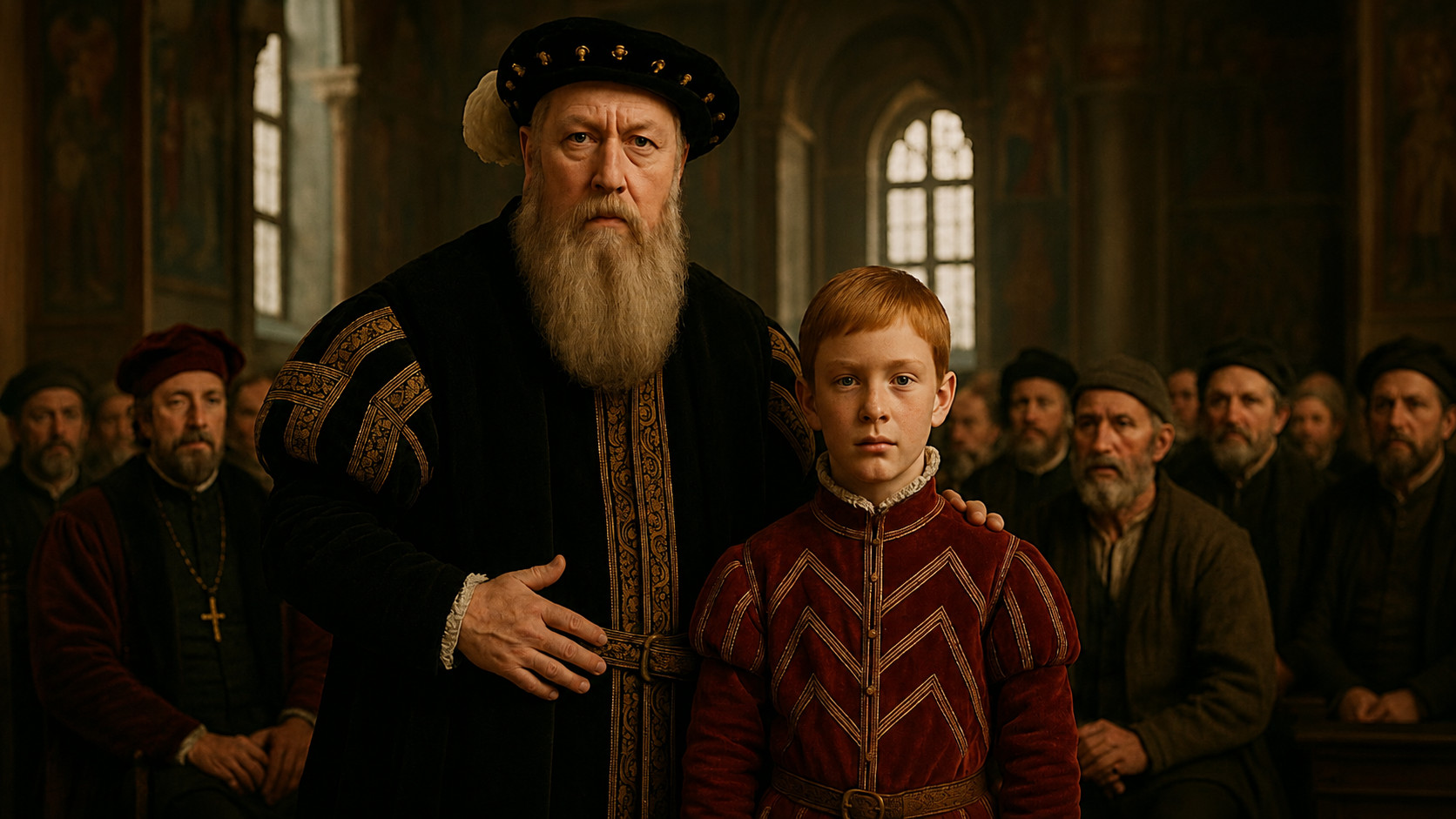
Gustav Vasa had subdued the rebellion of 1542-43, but he had been shaken by the initial success of the rebels. He needed to secure his position – and that of his descendants.
Sweden had for centuries been an elective monarchy, meaning that the king had to be chosen by the nobility. Even though royal power tended to stay within the same family, the fact that the king had to be chosen gave the nobility great influence.
This was not something Gustav Vasa could accept. He still felt threatened by the Sture family, who had a stronger claim to the throne than himself. He had to make sure that the crown would stay in his family.
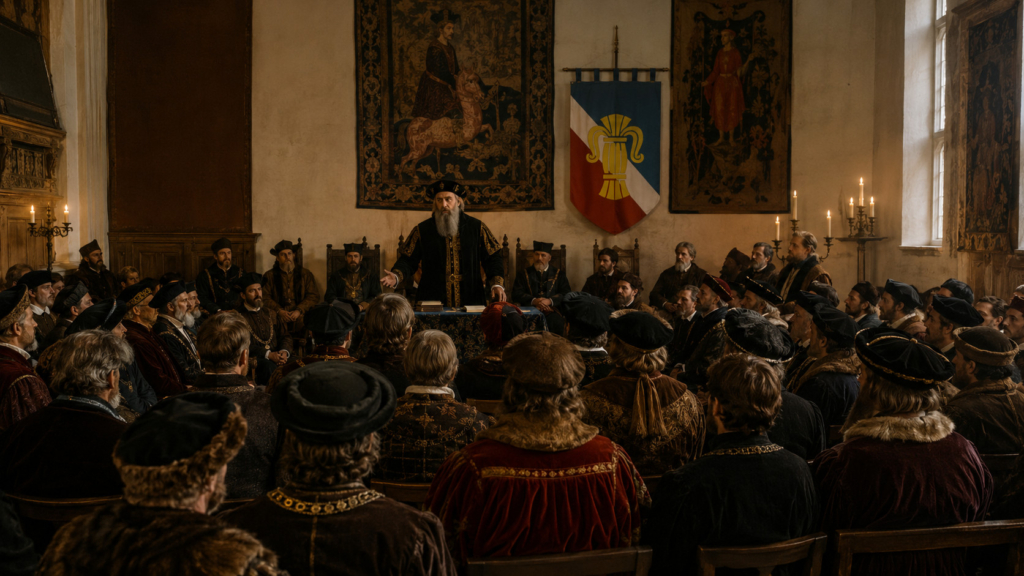
So, in 1544, when the parliament gathered in Västerås, he convinced the four estates – nobles, clergy, burghers and peasants – to transform Sweden into a hereditary monarchy. The crown should be passed down from father to eldest son.
The members or parliament swore an oath of allegiance, not only to Gustav but to his legitimate male descendants “for all time” – as long as they ruled justly and upheld divine and secular law.
Gustav had now secured the crown for his descendants – but also laid the foundation for future power struggles between his sons.
As the years passed, the Vasa family grew. Besides Erik, now crown prince, Gustav Vasa and Margareta Leijonhufvud had another eight surviving children:
Johan (1537), Katarina (1539), Cecilia (1540), Magnus (1542), Anna (1545), Sofia (1547), Elisabet (1549) and Karl (1550).
Three of Gustav Vasa’s sons would become king, and all of them based their claim on the newly established act of succession.
As her family grew, Margareta’s health declined. In August 1551, the family was sailing on the lake Mälaren, when she fell ill with high fever. They went ashore at the castle Tynnelsö, and Gustav Vasa sent for his doctors. But it was too late.
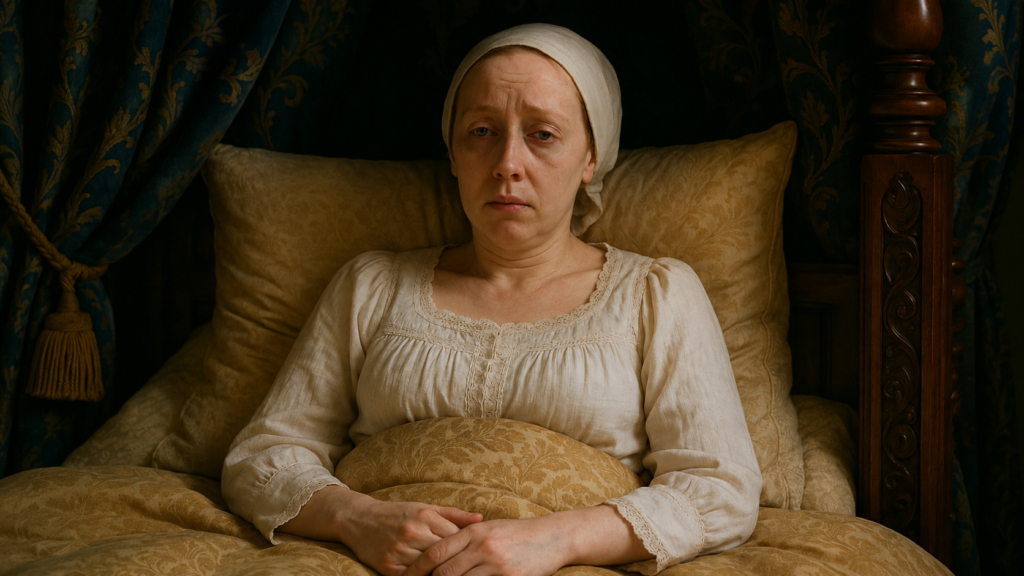
According to a contemporary source, at her deathbed she thanked her husband for elevating her to be queen, and for the strong heirs they have produced together. She asked her children to not quarrel and to be good to each other.
She died on August 26, 35 years old.
Gustav took his wife’s death very hard. He became weak with sorrow and could hardly manage to run his kingdom.
He also had nine children that needed to be looked after. He sent after the late queen’s sister, Birgitta, to take charge of their upbringing.
But despite apparently mourning Margareta deeply, it was still expected that he would remarry. A man needs a wife, the country needs a queen and the children needs a mother.
And he didn’t have to look very far to find the next one…
Sources:
Larsson, Lars-Olof. Gustav Vasa – landsfader eller tyrann? (2002)
Larsson, Olle. Gustav Vasa: en furste bland furstar. (2022)
Tegenborg, Falkdalen, Karin. Sveriges drottningar – i blickfånget från Vasatiden till idag. (2020)