
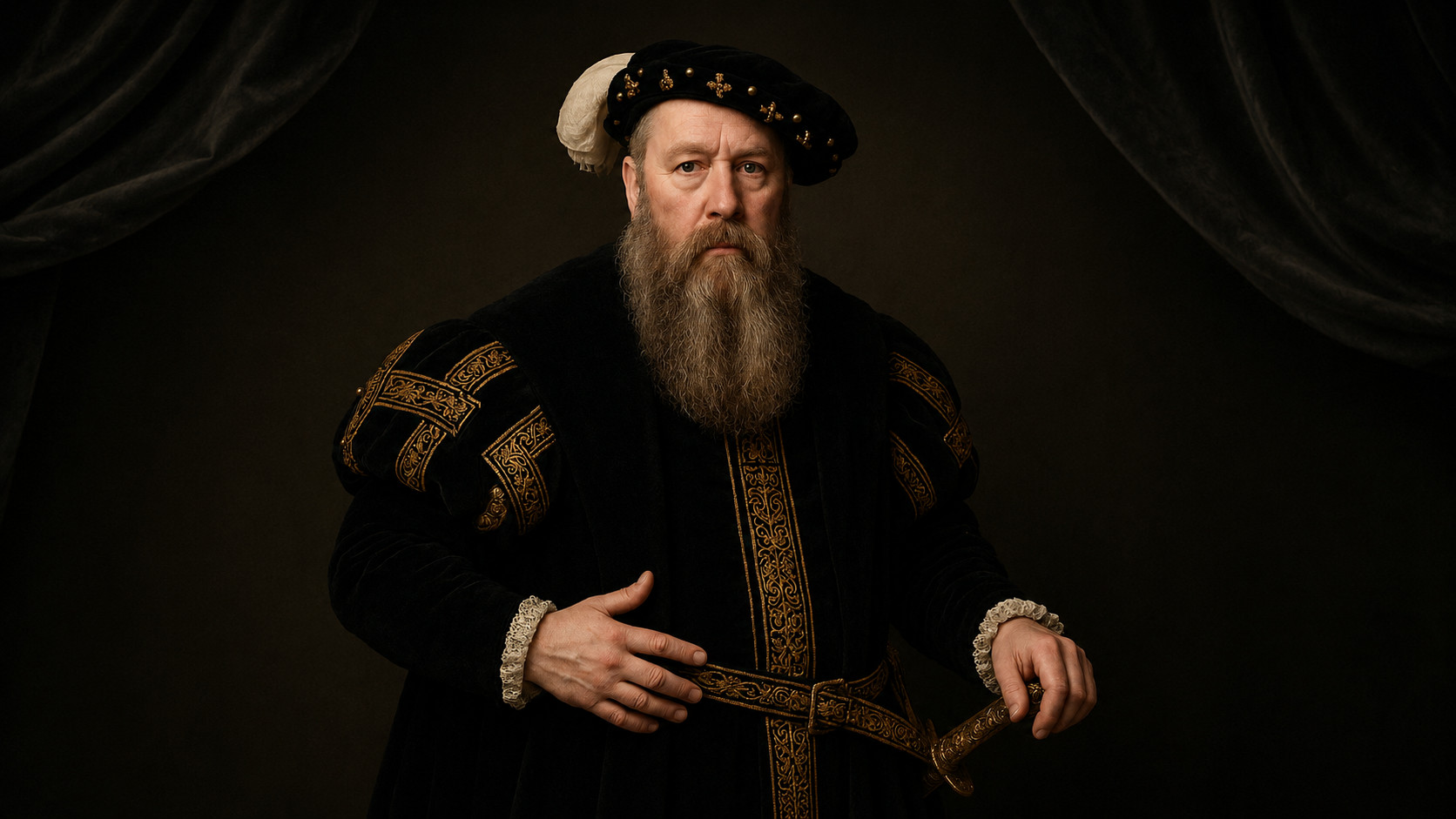
In our story of Gustav Vasa, the first king of an independent Sweden and the founder of the Vasa Dynasty, we have come to the final chapters – his later years, death and legacy.
We left of at the death of his second wife, Margareta Leijonhufvud. The king was now a widower with nine children that needed looking after. He sent of his deceased wife’s sister, Birgitta, to care for them.
Birgitta brought her own daughter to court, 16-year-old Katarina Stenbock. The king, now 55 years old, set his sight on her as his new bride.
This posed a problem however, since she was his late wife’s niece, and thus his own children’s cousin. According to ecclesiastical law, they were too closely related to be married.

This led to an argument with the bishops, but Gustav was backed by the privy council, and eventually he got his way. The wedding was held on August 22, 1552, and Katarina was crowned queen the following day.
The later years of Gustav Vasa’s life and reign was marked by a war against Russia 1554-1557, about the border regions of eastern Sweden (now Finland). The war ended in a stalemate with no decisive victory on either side.
But Gustav also had problems closer to home, such as his unruly children.
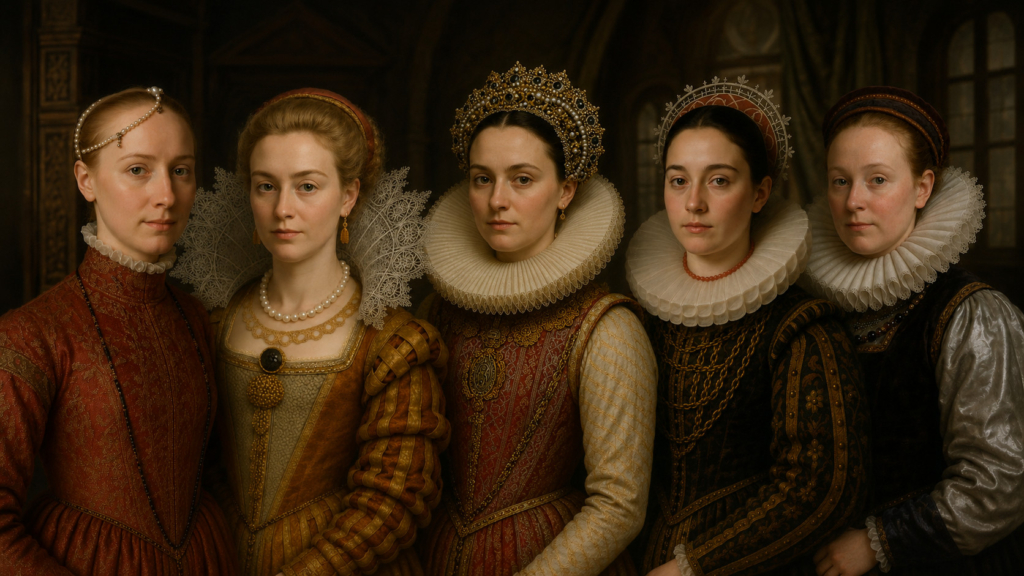
He tried really hard to find suitable matches for his daughters, offering a staggering 100 000 daler as dowry for each of the five girls – around five times more than other European princesses of the time.
This was because of the Vasa family’s low status as a newly established dynasty, and would guarantee his daughters’ marriages and their status.
Despite this, it was still hard to find husbands. Only one of his daughters was married in Gustav’s lifetime, the eldest, Katarina.
During the celebrations, the second daughter, Cecilia, became a little too close to the groom’s brother, who was found in her bedchamber “barely wearing pants”. The scandal has become known as the Vadstena thunder.
The king was furious and Cecilia accused him of tearing her hair out, but Gustav himself claimed it “simply fell of her”.
Towards the end of his life, Gustav suffered from several illnesses – stomach problems, an inflamed femur, chronic ear infections, and he had festering abscesses in his jaw.
As a result, he was half deaf, almost toothless and walked with a severe limp.
In June 1560, he called the estates to Stockholm to say his farewell and secure the inheritance of his children. It was again stated that his eldest son, Erik, would inherit the crown. His other three sons – Johan, Magnus and Karl, would inherit large dukedoms.
With this, Gustav hoped to avoid strife between the brothers after his death – a vain hope, it would prove.
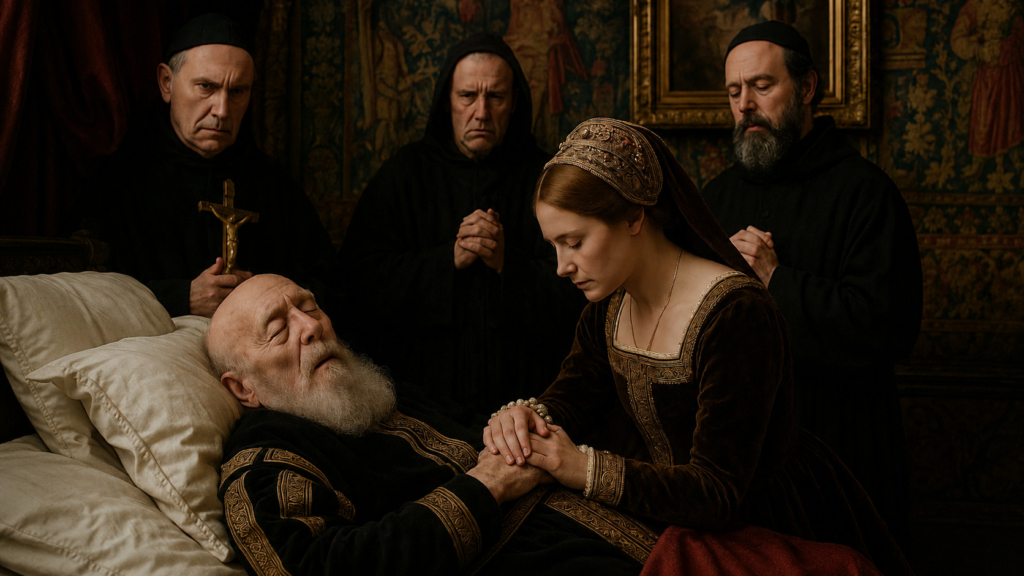
In September, the king became bedridden. The queen, Katarina Stenbock, constantly watched over him, and his doctors did their best to save him. But nothing worked.
Gustav Vasa’s last days were painful, and he was also tormented by regret, admitting to his priest that he had sinned and was afraid to not receive the Lord’s mercy.
He died around 8 o’clock in the morning on September 29, 1560. He had then ruled for 37 years.
The Legacy of Gustav Vasa.
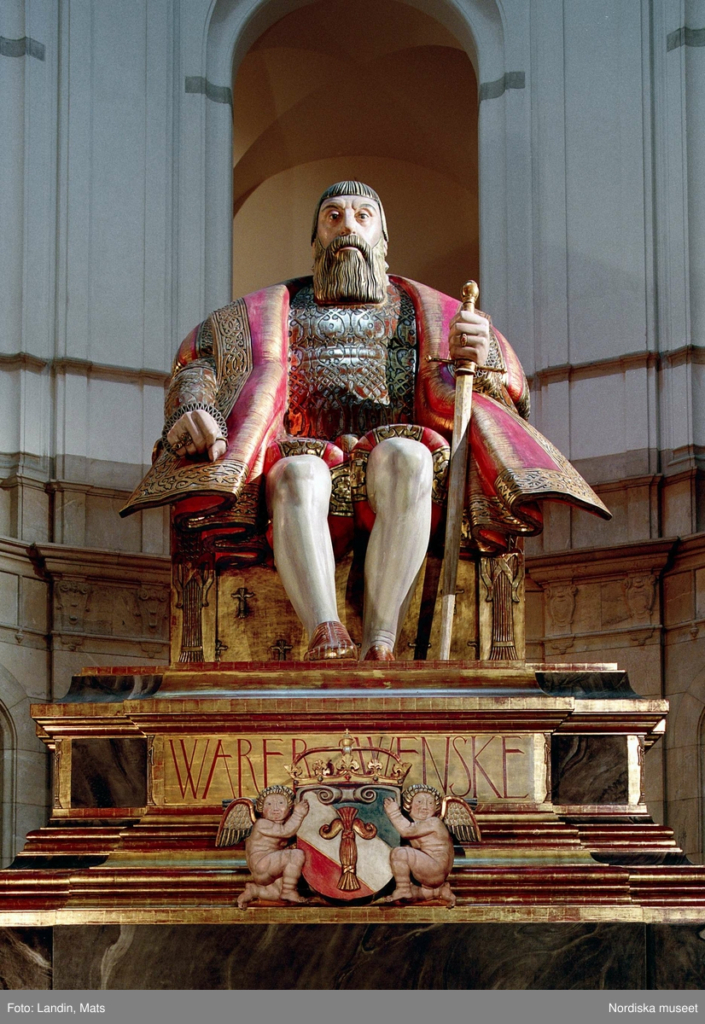
There is no one in Swedish history even close to Gustav Vasa when it comes to creating his own image and legacy.
He was a master of propaganda and knew exactly how he wanted to be remembered – as the liberator and founding father of a country and a dynasty.
He employed chroniclers to whom he dictated his own story, where he was the hero.
And this image of him lived on unquestioned for centuries. He was the benevolent father of the country, liberating his subjects from the Danish tyranny and protecting them from all enemies – foreign and domestic.
Not until a few decades into the 20th century did this view of Gustav Vasa began to be questioned, and his lesser admirable qualities emphasized, such as the paranoia, the disposing of political enemies and his brutal methods when dealing with popular uprisings.
Maybe the “truth” – if there is such a thing – lies somewhere in the middle. He was a mere noble, who led a liberation movement, took the crown and reestablished Sweden as an independent country.
He lay the foundation for the modern state by centralizing power and creating an administrative network previously unseen in the country.
Sources:
Larsson, Lars-Olof. Gustav Vasa – landsfader eller tyrann? (2002)
Larsson, Olle. Gustav Vasa: en furste bland furstar. (2022)