

Gustav Vasa had finally become king. But his troubles were not over. Not everyone accepted his rule, as he was not of royal birth, and he owed the merchants of Lübeck a lot of money.
But right around this time, the 1520s, a new movement was sweeping through Europe – the Reformation.
The Reformation in 16th-century Europe was a major religious movement that challenged the authority of the Catholic Church. It began when Martin Luther criticized church practices, especially the sale of indulgences, in 1517. His ideas spread quickly, leading to the formation of Protestant churches.
One aspect that especially appealed to Gustav Vasa, was that by rejecting the pope’s authority, he could limit the influence of the Catholic Church and seize church lands and income. He was very much in need of money, which the church had in abundance.
Therefore, whether Gustav himself believed in the ideas of Martin Luther or not – they suited him.
In 1527, he faced both financial troubles as well as threat of rebellion. In June, he gathered the Riksdag of the Estates at Västerås, where he gave them an ultimatum; give him what he wanted, or he would step down as king.

Ultimately, Gustav was granted the right to confiscate church property and approve clerical appointments, thus laying the foundation of a national church under royal control.
The Swedish reformation had begun. By allocating the church’s wealth to the crown and to the nobles, Gustav had secured his position. The next step was to secure his dynasty.
It was time to find a wife.
Gustav Vasa had consolidated his power, and he could finally be crowned king of Sweden. Through the coronation, the king was chosen and approved by God, and this was very important for Gustav who had a rather weak claim to the throne.
Despite this, it was still difficult to find a suitable woman to marry. He wanted a wife who could give him and his heirs legitimacy, but few rulers wanted to marry their daughter to someone in his precarious position.
However, the small but respected dukedom of Saxe-Lauenburg finally agreed. The bride was named Katarina, and she was 17 when she arrived in Sweden in 1531 to marry a man she never met, who was 18 years her senior.
Read more about Katarina here.
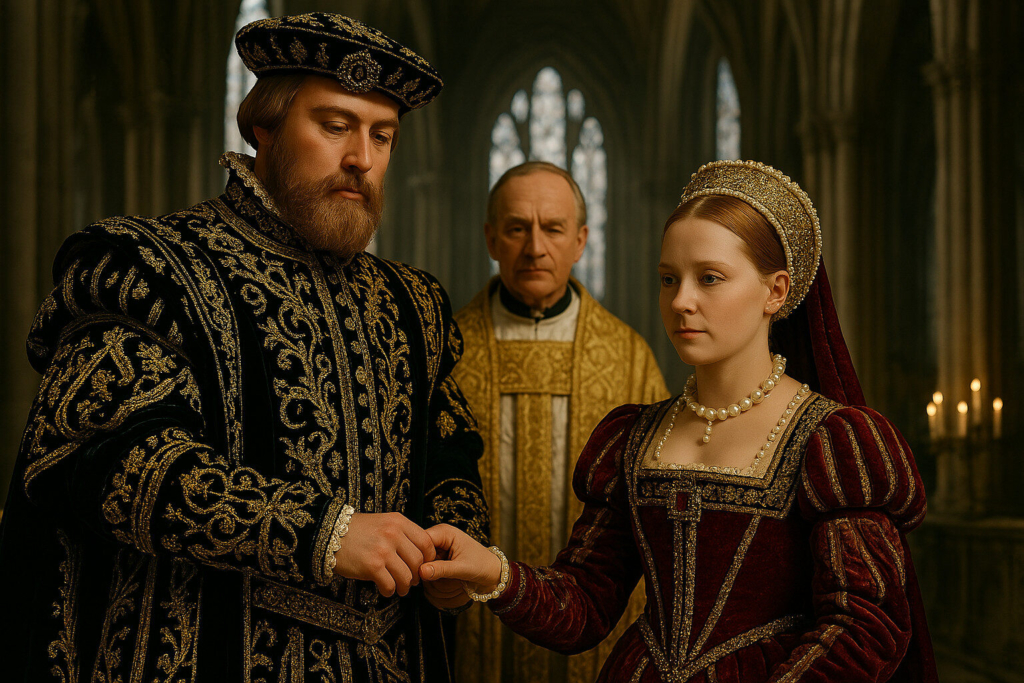
The wedding was held in on September 24th, and the celebrations lasted for a week. On December 13, 1533, Gustav Vasa’s first child was born – Erik. Later, his birth was described as full of bad omens, but contemporary sources stated that the whole country was filled with joy and happiness at the birth of the prince.
But the happiness of the royal family would be short lived…
Sources:
Larsson, Lars-Olof. Gustav Vasa – landsfader eller tyrann? (2002)
Larsson, Olle. Gustav Vasa: en furste bland furstar. (2022)