
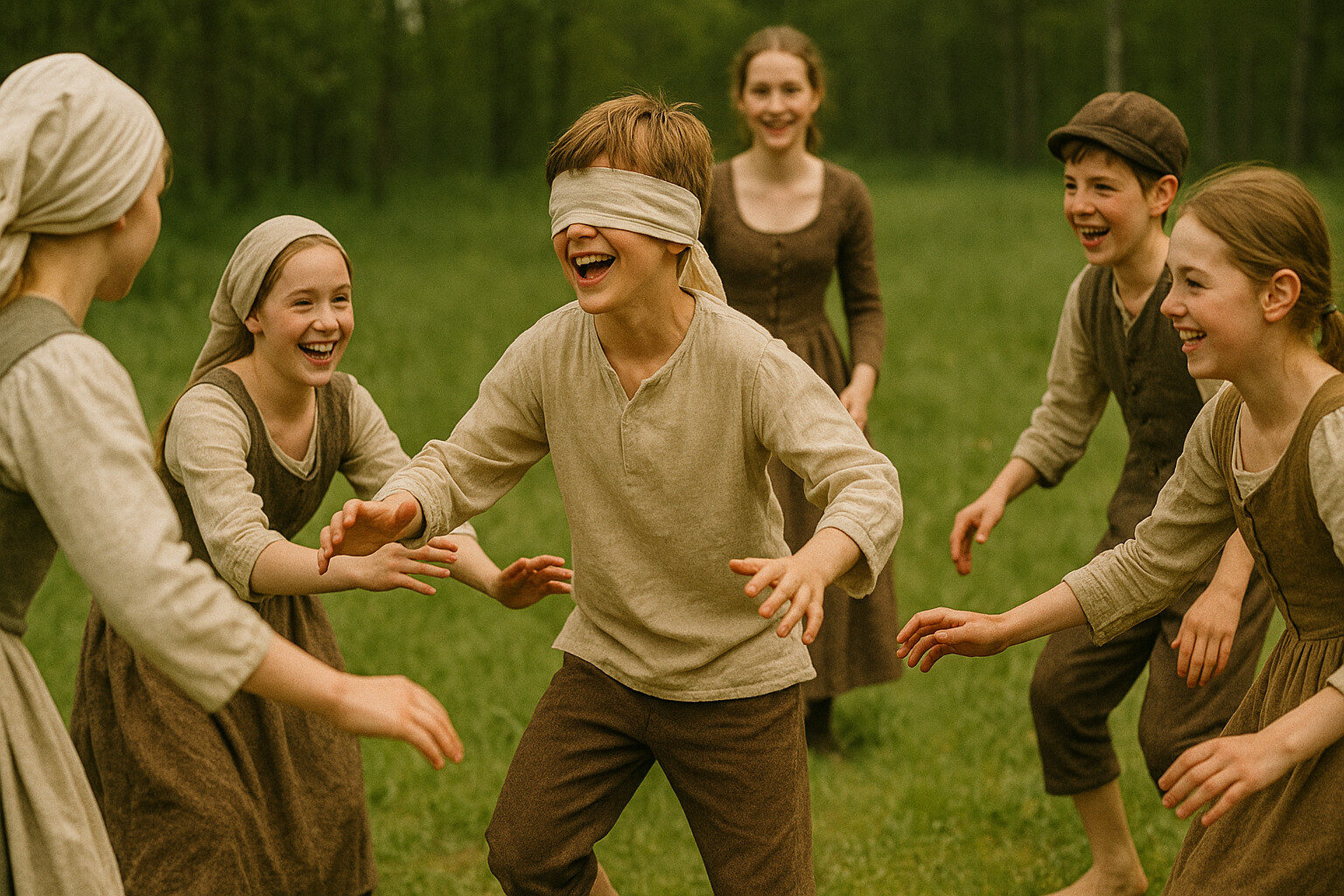
Something that often strikes me when I study history is how awful everything seemed. War, famine, plague, poverty…
I have often wondered if life really was as awful as it would seem. Or how did the average people find comfort? How did they enjoy themselves? Therefore, in this next theme – Fun and Games – we will explore the different ways common people of the past entertained themselves.
Let’s start with the most basic source of joy and fun; children’s play.
Skuttunge, Uppland, 1679:
A group of young girls merrily makes their way through the small village, giggling. One of them, Anna, is dressed as a bride, wearing a pretty dress and with her long hair loose over her shoulders.
They are on their way to the sexton’s house, to ask him to play for them, as there had to be music for a wedding. Unfortunately, he is not home, but they manage to get the keys to the church from his wife – who sends her daughter Elisabet to watch the girls.
They continue to the church, the place where weddings are held. Once inside the sacristy, they bring out the bridal chairs, the church register, the bridal jewelry, and the ceremonial cloth that was held over the couple during the wedding.
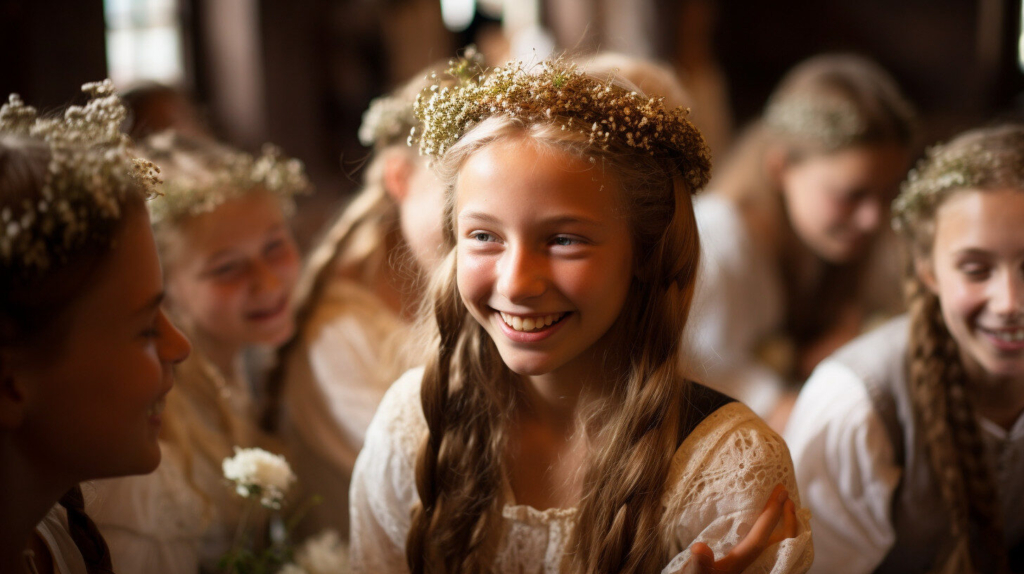
Now they are all set for the ceremony – except that they need a ring and a groom. One of the girls, Brita, volunteers to be the groom, and the older girl, Elisabet, lends them her own engagement ring. And then, to much giggling, Anna and Brita “marries” each other.
The reason we know all this, almost 350 years later, is that the parish priest found out. He was not at all amused by the girls’ game, and reported the matter to the cathedral chapter, which took the matter very seriously and launched an investigation.
Those of the girls who were under 7 were not punished, the others were sentenced to “church penance” – to sit in a place of disgrace during the next church services.
We’re often told how children worked in the past – and they did. But they also seemed to find time to play. It’s not so easy to find these games in sources however, unfortunately almost only when the fun and games turned into something bad, and left marks in court documents. Historian Annika Sandén have found a few examples from the 17th– and 18th centuries, such as the example above.
One recurrent theme is the games that occurred at or outside the church. The priests often complained that children and teenagers played rowdy games there, amongst other things played ball in the churchyard, which not seldom led to broken church windows.
Sandén have found two instances where children dressed in clothes of the opposite gender and sat down on the wrong side of the aisle (and mind you, cross-dressing was actually illegal!).
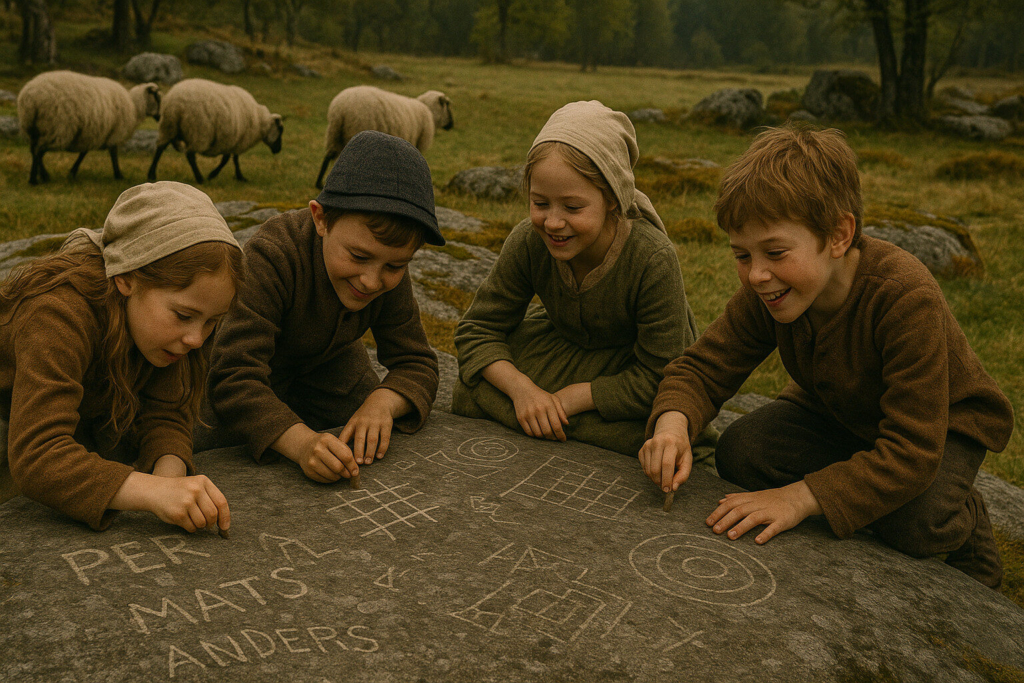
Even tough children worked, they sometimes had time to play while working. One chore often entrusted to children was the herding of animals. The young shepherds often met up with each other and played together. On some of these locations rock carvings have been found, very alike crude graffiti of our days, or drawings of small boardgames. Sometimes, the children played so much that they lost track of the animals, who wandered off.
Children of all times seems to have played ballgames, had snowball fights, played tag, hide-and-seek, and all kinds of role plays, where they played or acted things they had seen in real life, such as the girls playing wedding above. Another examples is of a group of boys who played execution – a game that ended so badly that the boy who played executioner took his role too seriously and actually killed his friend.
In the next post, we will take a look at how teenagers and young adults entertained themselves.
Source:
Sandén, Annika. Fröjdelekar. Glädje, lust och nöjen under svensk stormaktstid. (2020)