
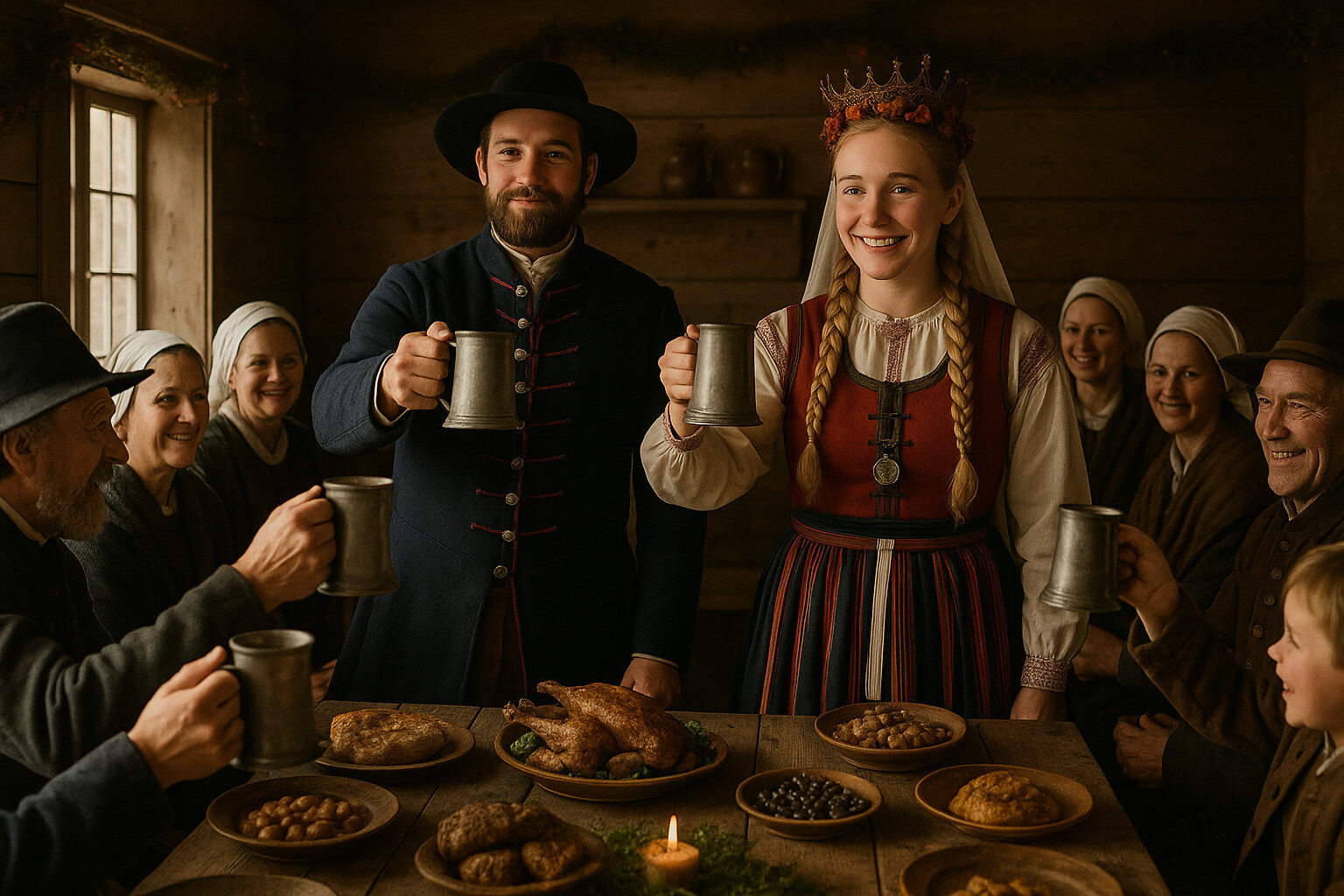
Let’s move on from nightly courtship, where young people got to know each other and found a partner, to the real deal – engagements and weddings.
Once a couple settled on each other, the man had to ask the woman’s father or male relatives for her hand in marriage. If they agreed, the engaged couple shook hands, The Lord’s prayer was read, everyone put their hands on the couple’s – and then it was party time!
Brandy was served, engagement gifts were exchanged and then there was games and dancing for several days.
The gifts varied, of course, according to the financial situation of the betrothed, but something had to be given to seal the engagement. The women often received some type of clothing, that she wore at church the next day to signal that she was now an engaged woman. And she often gifted her future husband some type of clothing as well, such as a hat or gloves.
A decree from the 1640’s tried to regulate the engagement parties in Sweden. The authorities felt that celebrations got out of hand – the people simply partied too much.
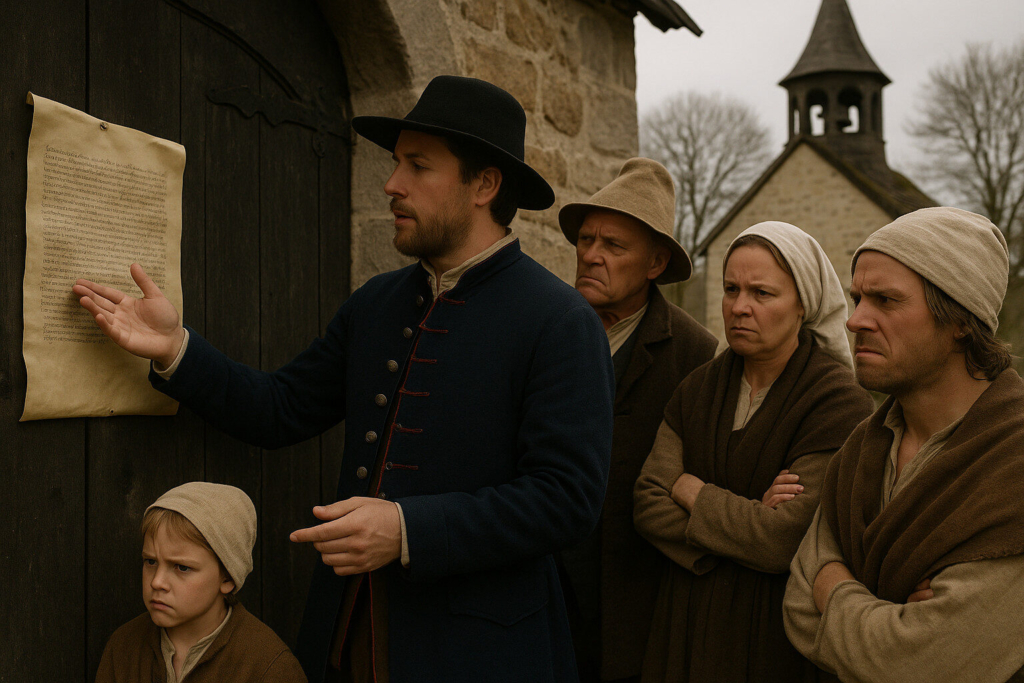
The decree stated that engagement- and wedding parties should only be for the closest family and friends. Large parties were discouraged. Secondly, there was not to be served any food, especially not pastries or sweets – only pickled ginger, wheat crusts, seasoned bread and wine.
Engagement parties should start at eight o’clock and end at 10.
But, as with the other examples of how church and state tried to control the population when it came to celebrations and entertainments – this was ignored.
So came the wedding day!
The feast typically took place at the bride’s parents’ house. It was decorated with flowers (if season allowed), ribbons, rosettes, colourful cloth etc. Both bride and groom were dressed in their best clothes.
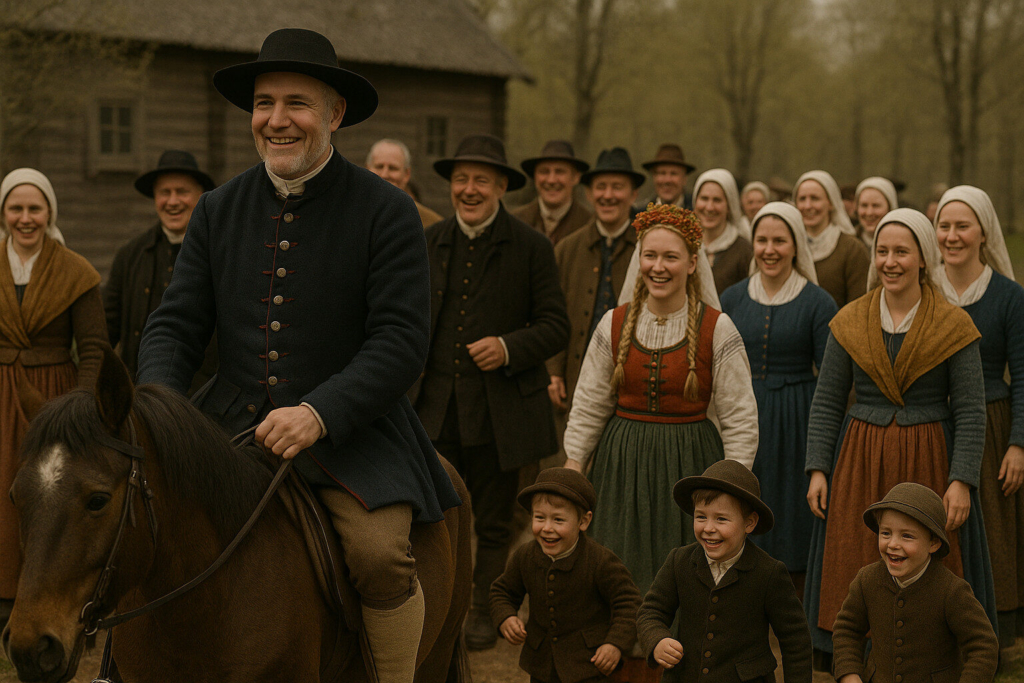
A whole entourage walked together to church, first the groom, riding on the best horse in the village, then the priest, the groomsmen and family. Then came the bride’s family and bridesmaids and the fiddlers. Last of all came the bride. Once at church, everyone waited for her, and she was admired and cheered, before entering the church together with her fiancé.
A pre-Christian tradition that survived for a long time was that when the bride and groom were declared husband and wife, both the couple and the guests slapped each other hard on the back. It was to physically feel the gravity of the sealed arrangement, since written contracts were not that common among poor or rural folks.
After the wedding, the entourage went back to the bride’s parent’s house to party.
First was a lot of toasting – they toasted the bride and groom, the fiddlers, the poor in the village, and then one toast each for all those who couldn’t attend.
Then there was dancing. First the bride danced with the priest, then the groom, then with her father and father-in-law, and all the male guests. After this, the bride and women danced a ring dance. Then the bride and maid of honour danced away to change the bride’s dress, from her wedding clothes to her “married clothes”.
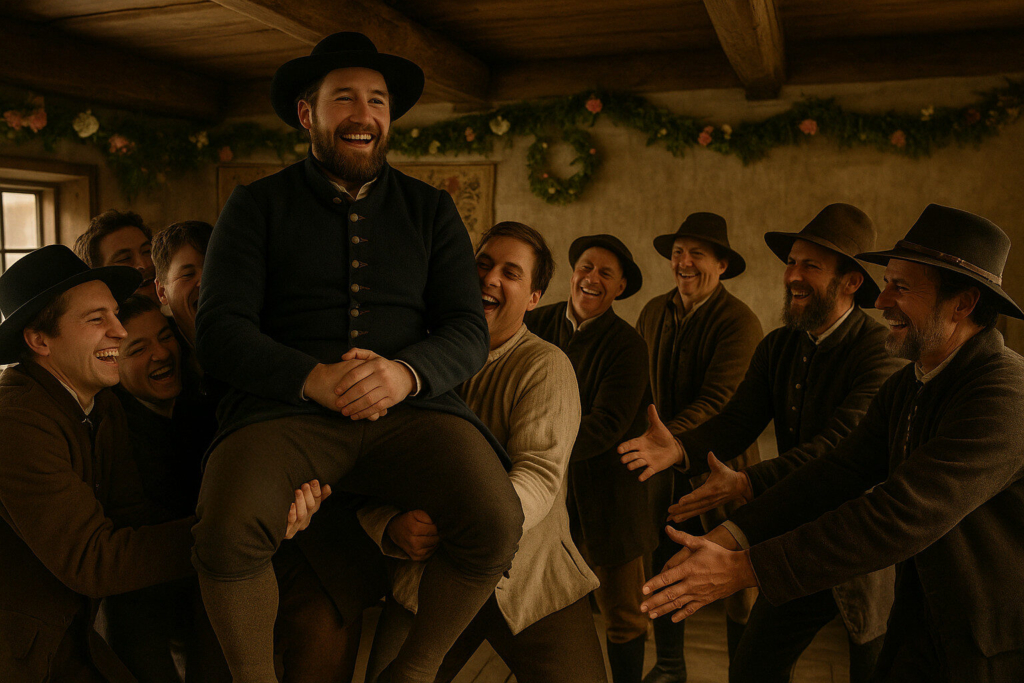
While they were away, the unmarried groomsmen gathered around the groom, hoisting him in the air. The married men of the village waited to receive him to their ranks, and a playful tug-of-war played out where the bachelors and the husbands “fought” over the groom.
At dinner, many dishes were served, and lots and lots of beer and wine. The party went on long into the night. Weddings were always held on Saturdays, and on Sunday, the wedding guests rested, and then the party went on again on Monday. And it could go on for days.
So, the rules that the authorities tried to enforce were not heeded by the common people. The whole village was often involved in the celebrations, large quantities of food and alcohol consumed, and the celebrations went on for days.
Source:
Sandén, Annika. Fröjdelekar. Glädje, lust och nöjen under svensk stormaktstid. (2020)